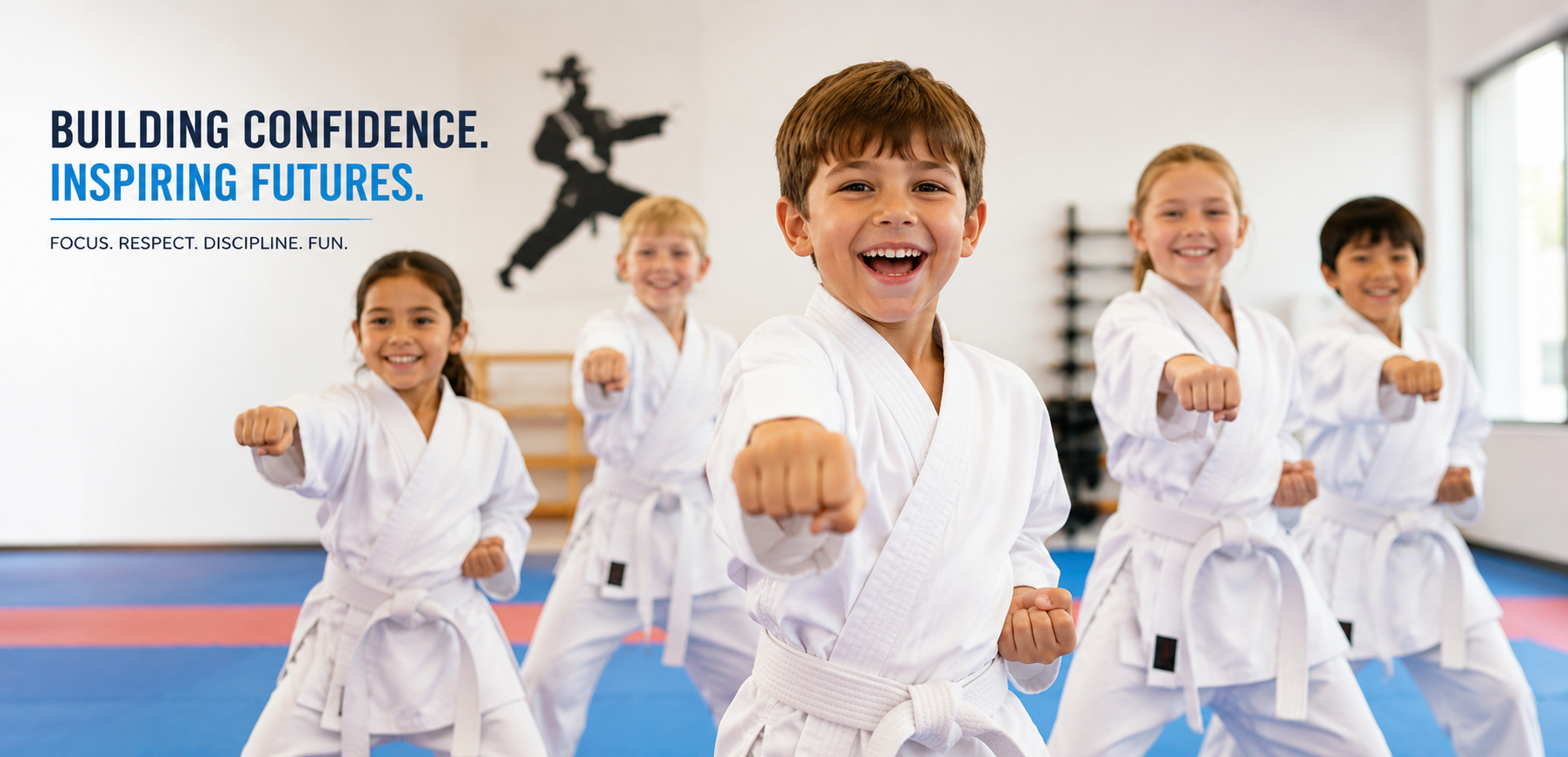
Youth Karate (Ages 7–9)
Advanced technique, goal-setting, and the confidence to handle challenges
Karate for the Goal-Setter
Seven, eight, and nine-year-olds are entering a critical window for learning and growth. They’re developing their own interests, beginning to understand their strengths and challenges, and learning what it means to work toward something meaningful. Youth Karate meets them at this stage with increased technical depth, bigger challenges, and genuine leadership opportunities.
In these classes, karate becomes more than just kicks and punches. It becomes a framework for understanding persistence, resilience, and the power of practice. Kids this age grasp cause-and-effect deeply — they understand that their effort directly determines their progress. That’s powerful.
What Happens in a Youth Karate Class (30 minutes)
Class structure becomes more rigorous and technique-focused:
- 🥋 Focused warm-up — conditioning and flexibility work that prepares serious martial artists
- 💪 Advanced technique — cleaner, faster, more precise kicks, blocks, and combinations
- ⚡ Drilling and refinement — repetition that builds muscle memory and confidence in sparring
- 🤝 Controlled sparring — light, safe practice that helps kids apply what they’ve learned and manage pressure
- 👥 Leadership activities — opportunities to help younger students or lead warm-ups
- 🎯 Character focus — monthly themes like perseverance, integrity, or kindness woven throughout
What Youth Karate Students Develop
- ✓ Advanced, refined karate technique
- ✓ Goal-setting and long-term thinking
- ✓ Perseverance through challenges and setbacks
- ✓ Pressure management and focus under stress
- ✓ Early leadership skills and helping others
- ✓ Increased physical fitness and athleticism
- ✓ Self-awareness and emotional intelligence
- ✓ The confidence to try new things and embrace failure as learning
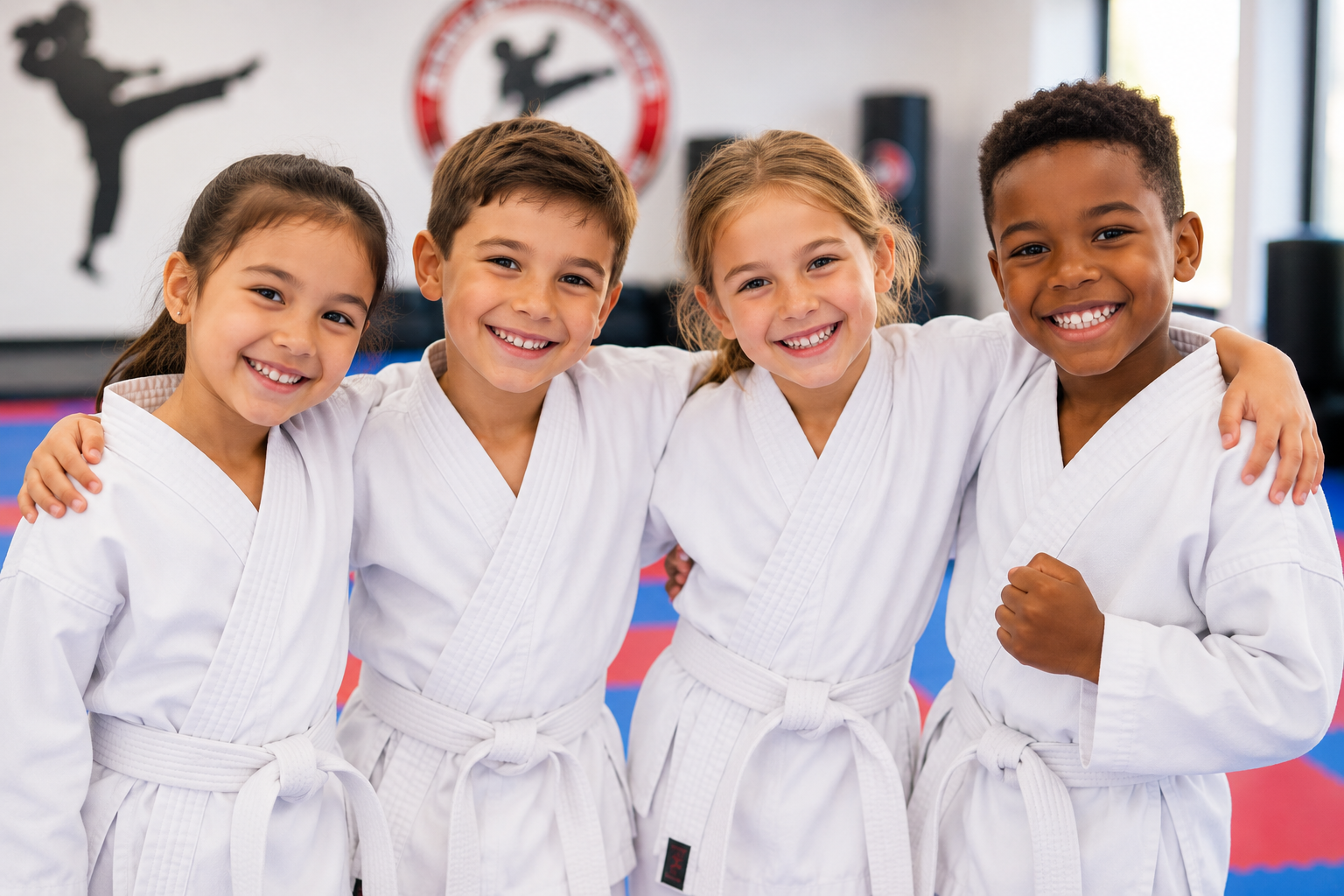
Leadership Starts Here
In Youth Karate, students begin to mentor and assist younger kids. This is when many of them develop a sense of responsibility and purpose. Helping a Little Dragon finally nail a kick, or encouraging a nervous Tiny Tiger — these moments teach kids what leadership actually means.
And it builds confidence in ways that are hard to describe. A shy kid who becomes comfortable standing in front of the class to lead warm-ups? That carries into school presentations, group projects, and their growing sense of what they’re capable of.
Why Ages 7–9 Matter
This is when children begin to develop their self-concept. They start asking: “Am I good at this?” “Can I do hard things?” “Do people respect me?” Martial arts gives them real, tangible answers. They earn belts through genuine effort. They master skills they once thought impossible. They stand in front of others and lead.
These experiences shape how kids see themselves for years to come. And unlike some activities where success is determined by genetics or talent, martial arts is driven by practice and effort — it teaches kids that growth is in their control.
What Parents Notice
Parents of Youth Karate students often report bigger shifts than younger ages. Better focus at school. More resilience when facing academic or social challenges. The ability to handle competitive pressure (including sports at school). And something harder to measure but deeply meaningful — kids who walk taller and carry themselves with genuine confidence.
Many kids at this age also begin to have a real interest in martial arts itself. They ask questions about technique. They want to spar. They begin thinking about eventually reaching black belt. For some kids, karate becomes a genuine passion and hobby — and that’s a gift.
Start the Journey
Every student begins with a free intro lesson. Your child will experience a real Youth Karate class, meet the instructors, and get a sense of what this program can offer. Let’s find out if karate is the right fit for your young warrior.